
Buy EU-Biogas: Certified European Biomethane Supply
Europe's biomethane sector reached 1,548 plants by end of 2024, according to EBA. The market is moving fast. Certified EU biogas can meet compliance obligations under BEHG, GEG, EU ETS and FuelEU Maritime, or support voluntary decarbonisation targets. BioGem Express connects buyers and producers through the certification and documentation chain that makes it work.
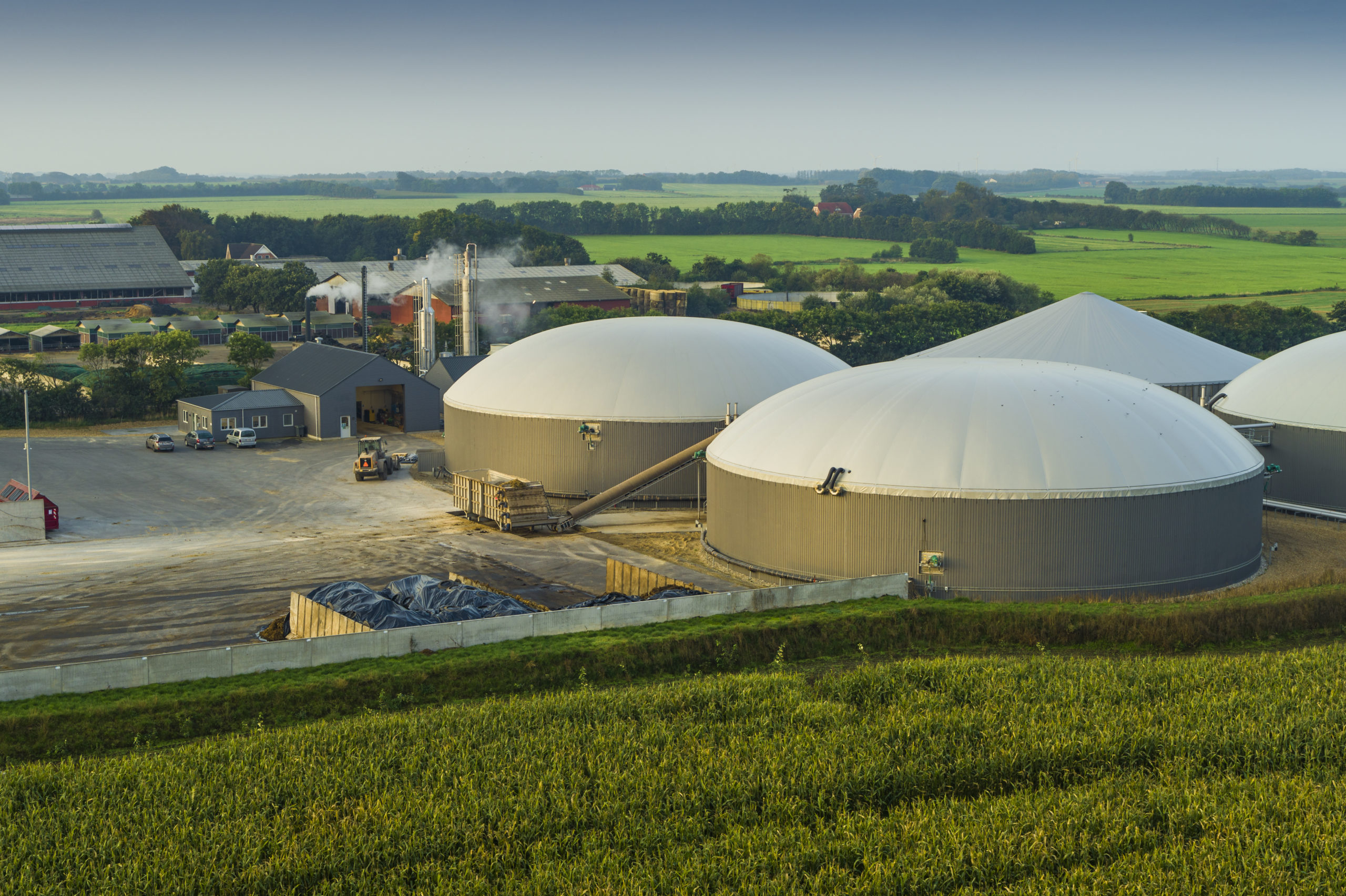
What is EU-Biogas and why does it matter?
EU-Biogas refers to biomethane produced from organic feedstocks within Europe — upgraded to natural gas quality, certified under recognised frameworks such as ISCC EU or REDcert EU, and traded across the pan-European gas grid. It is not a single product label but a market category: certified European biomethane that can move from producer to buyer through mass-balance accounting, regardless of physical distance or national border.
The European biomethane market has grown rapidly since REPowerEU set a target of 35 bcm annually by 2030 — backed by approximately €18 billion already earmarked for the sector, according to the EBA Statistical Report 2023. The EBA Statistical Report 2024 recorded 1,548 biomethane plants in operation, with Denmark, France, Germany, the United Kingdom, and Spain leading production. Cross-border transfers — tracked through Guarantees of Origin and national registries — reached approximately 3.5 TWh from EU countries to Germany alone in 2022, according to dena's Biomethane Industry Barometer 2025.
For buyers, EU-Biogas offers a path to decarbonisation that works within existing gas infrastructure — no new equipment, no grid disruption. For producers, it opens access to demand markets beyond their own national borders. The mechanics that make this possible — GoOs, Proof of Sustainability, mass balance, and the EU Union Database — are what BioGem Express navigates on your behalf.
How EU biomethane trade actually works
Biomethane doesn't travel in labelled containers. It moves through the gas grid, tracked by certificates and mass-balance accounting — here's the three-step logic behind every cross-border trade.
Produced & certified at source
Biomethane is produced from organic feedstocks — agricultural residues, manure, biowaste, or sewage sludge — and upgraded to natural gas quality before injection into the local grid. The producer obtains certification under a recognised RED voluntary scheme such as ISCC EU or REDcert EU, which validates feedstock origin, greenhouse-gas savings, and chain-of-custody documentation.
Transferred via the gas grid
Once certified, the associated certificates — Guarantees of Origin or Proof of Sustainability — are issued and transferred through national registries connected via ERGaR (European Renewable Gas Registry). Recent jurisprudence — including a landmark ruling by the German Finanzgericht Berlin-Brandenburg (1 K 1168/20) — confirmed that blocking cross-border biomethane imports violates the EU's free movement of goods, reinforcing a legally open pan-European market. The EU Union Database (UDB), being progressively rolled out, will add a further traceability layer for compliance-grade volumes once full deployment is complete.
Matched to your use case
At the buyer's end, the certificates are allocated to the relevant compliance framework — BEHG, EU ETS, FuelEU Maritime (where Bio-LNG is bunkered) — or to GEG via the dena Biogasregister and the national biomass sustainability ordinance, which follow a separate evidence path from RED voluntary schemes. Volumes can also be used for voluntary disclosure under CSRD or corporate sustainability commitments. The type of certificate required differs by use case: GoOs for book-and-claim disclosure; PoS for mass-balance compliance. BioGem Express structures the supply to match your reporting obligations exactly.
The four building blocks of EU-Biogas certification
Sourcing EU-certified biomethane means understanding which certificate does what. Using the wrong instrument for a compliance obligation can leave a buyer exposed — here is what each element covers.
Guarantee of Origin (GoO)
A GoO certifies the renewable origin of a gas volume in accordance with RED. It operates on a book-and-claim basis: the certificate can be transferred separately from the physical molecule, enabling buyers to claim a green gas share without being physically connected to the production site. GoOs are the standard instrument for voluntary markets and disclosure obligations such as CSRD. They do not, on their own, satisfy BEHG, EU ETS, FuelEU Maritime, or GEG compliance requirements — each of which requires its own dedicated proof structure.
Proof of Sustainability (PoS)
A PoS certifies that the biomethane meets RED sustainability criteria — feedstock eligibility, GHG reduction thresholds (≥70% for installations from 2021–2025; ≥80% from 2026), and full chain-of-custody traceability. PoS operates on a mass-balance basis and cannot be separated from the physical supply chain. It is the required instrument for BEHG compliance in Germany, EU ETS reporting, and FuelEU Maritime (including Bio-LNG bunkering). Germany's GEG follows a different evidence path — anchored in the dena Biogasregister and the national BiomassestromNachhaltigkeitsverordnung — rather than RED voluntary schemes. Both GoO and PoS can apply to the same volumes where a buyer needs both disclosure and compliance coverage.
EU Union Database (UDB)
The Union Database is the EU's centralised tracking system for biogases under RED III. It records production, transfer, and use of certified biomethane volumes across Member States and enables cross-border traceability at a European level. The UDB is being progressively rolled out — operational for certain use cases, with full deployment ongoing — and will become the reference registry for compliance volumes, particularly for buyers in regulated markets seeking audit-ready documentation that covers the full supply chain from feedstock to final use.
Mass balance & chain of custody
Mass balance is the accounting logic that makes cross-border EU biomethane trade possible: certified volumes injected anywhere in the European gas network can be attributed — via contractual documentation — to consumption at any connected point. The buyer doesn't receive the specific molecules produced; they receive the certified attributes. BioGem Express manages the full documentation chain — from producer ISCC certification to the buyer's registry allocation — to ensure every volume is traceable, clean, and audit-ready.
Your EU-Biogas trading partner
Europe's biomethane market is active, but it isn't simple. Producers in Denmark, France, Spain, or the Czech Republic operate under different national certification schemes. Buyers in Germany, Switzerland, or the Netherlands face different compliance frameworks. Getting the two sides to transact — with the right certificate, the right documentation, and the right price structure — is what BioGem Express does.
As a Swiss-headquartered trading company, we have a particular edge on the Swiss import market — Europe's largest single buyer of cross-border biomethane and a market with stricter rules: only waste and residue-based volumes qualify, with energy crops excluded. We also support shipping operators bunkering Bio-LNG under FuelEU Maritime, where certified biomethane delivers a zero Well-to-Tank factor.
We source from verified producers operating under recognised RED voluntary schemes, handle the cross-border registry transfers, and deliver volumes to buyers with the documentation their compliance team needs. Whether you're meeting BEHG obligations, hitting a GEG heating requirement, or building a voluntary decarbonisation track record — we structure the supply around what you actually need to show.
"You get more than a supply contract. You get a partner who understands both sides of the market — producers who need offtake certainty, and buyers who need the proof to match."
BioGem Express trading team- Sourcing of certified EU biomethane from verified producers across Denmark, France, Germany, the United Kingdom, Spain, the Netherlands, and beyond
- Cross-border registry handling: GoO and PoS transfers via ERGaR, Nabisy, EEX, and national frameworks
- Supply structured for the right compliance use: BEHG, GEG (via dena Biogasregister), EU ETS, FuelEU Maritime, or voluntary CSRD disclosure
- Swiss market specialists — sourcing waste and residue-based volumes that meet Switzerland's stricter feedstock criteria (energy crops excluded)
- Bio-LNG supply for maritime bunkering under FuelEU Maritime — zero Well-to-Tank factor with full sustainability proof
- Long-term offtake agreements and Biomethane Purchase Agreements (BPAs) — both subsidised and unsubsidised volumes
- Full documentation package: ISCC certification chain, mass-balance records, Union Database entries, audit-ready reporting
- Regulatory guidance on RED III implementation, ETS II transition, and evolving national compliance requirements
Key questions on EU-Biogas
EU-Biogas refers to biomethane produced from organic feedstocks within Europe, certified under recognised frameworks such as ISCC EU or REDcert EU, and traded across the European gas grid. It covers both the gas molecules and the associated certificates — Guarantees of Origin for voluntary use, and Proof of Sustainability for regulatory compliance. It is not a single formal label, but the widely used term for the European certified biomethane market.
Biomethane is injected into the national gas grid at the production site, then tracked through mass-balance accounting as it moves across the pan-European network. Certificates — GoOs or PoS — are transferred through national registries connected via ERGaR, and increasingly through the EU Union Database. A buyer in Germany can source certified biomethane from a Danish or French producer without the molecules physically travelling to their site. Recent jurisprudence — including a landmark ruling by the German Finanzgericht Berlin-Brandenburg (1 K 1168/20) — confirmed that blocking such cross-border transfers violates the EU's free movement of goods.
A Guarantee of Origin (GoO) certifies that a gas volume is renewable under RED and operates on a book-and-claim basis — it can be transferred separately from the physical gas for voluntary disclosure or CSRD reporting. A Proof of Sustainability (PoS) certifies that the biomethane meets RED sustainability criteria and is linked to mass-balance logic throughout the supply chain — it is required for BEHG, EU ETS, and FuelEU Maritime compliance. Germany's GEG follows a different evidence path through the dena Biogasregister and the national biomass sustainability ordinance. Both GoO and PoS can apply to the same volumes where a buyer needs full coverage.
Denmark is the largest European biomethane exporter, producing around 7,428 GWh annually (Panorama gaz renouvelables, end of 2023) and reaching a 38% share of its national gas grid in 2024 according to dena. France has the most biomethane plants by count. Germany, the United Kingdom, Spain, the Netherlands, and Sweden are significant producers. Switzerland is one of the largest single import markets for European biomethane, and applies stricter feedstock criteria — accepting only waste and residue-based volumes, with energy crops excluded.
Yes — provided the certification requirements specific to each framework are met. For BEHG use, Proof of Sustainability under a recognised RED voluntary scheme and Nabisy-linked verification are required. For EU ETS, sustainability certification under ISCC EU or equivalent is needed. For FuelEU Maritime (including Bio-LNG bunkering), a full PoS through the liquefaction chain is required. GEG follows a different evidence path entirely — anchored in the dena Biogasregister and the BiomassestromNachhaltigkeitsverordnung rather than RED voluntary schemes. BioGem Express manages the appropriate certificate and documentation path for each framework.
BioGem Express is a Swiss-based biomethane trading company operating across European regulated and voluntary markets. We source certified biomethane from verified EU producers, handle cross-border registry transfers, and deliver volumes to industrial buyers and energy companies with the GoO or PoS documentation their compliance teams need. We also support producers seeking reliable offtake — structuring long-term supply agreements and Biomethane Purchase Agreements across Germany, Switzerland, the Netherlands, and broader European markets.
Sources used on this page
Key market data and regulatory references on this page draw from the most authoritative European biogas and biomethane publications. All statistics reflect the latest available data at the time of writing.
Key data points used include 1,548 European biomethane plants recorded in the EBA Statistical Report 2024; the 35 bcm production target by 2030 from REPowerEU, with approximately €18 billion already earmarked for the sector (EBA, 2023); Denmark's 38% gas grid share and approximately 3.5 TWh cross-border transfers to Germany in 2022 from the dena Biomethane Industry Barometer 2025; and the confirmation that EU biomethane imports cannot be blocked under EU free movement of goods law, established by the Finanzgericht Berlin-Brandenburg ruling (1 K 1168/20).
- European market EBA Statistical Report 2024
- EU policy target REPowerEU: Delivering 35 bcm of Biomethane by 2030
- German market data Biomethane Industry Barometer 2025
- Cross-border registry ERGaR — European Renewable Gas Registry
- Certification framework ISCC EU System Documents
- GoO vs PoS distinction Value of Biomethane Certificates — White Paper
Ready to source certified EU biomethane?
Whether you're buying for compliance or voluntary decarbonisation — or producing and looking for a reliable offtake partner — our team can structure the right supply and documentation framework for your needs.